
















The NASDAQ Biotechnology Index (INDEXNASDAQ:NBI) is trading at three year highs despite market volatility, responding to breakthrough innovations and increased deals involving NASDAQ biotech stocks.
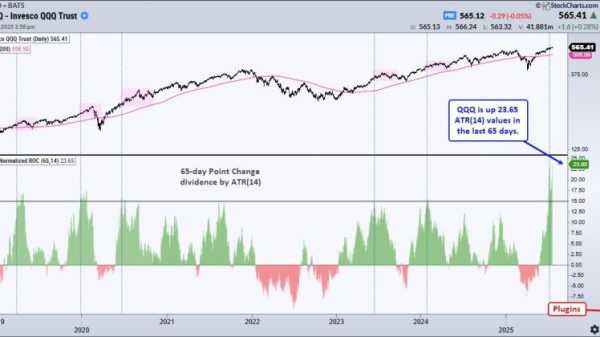
After dropping to a low of 3,637.05 in October 2023, the index climbed to a nearly three year peak of 4,954.813 on September 19, 2024. While the index pulled back to 4,530.69 in August 2025, it staged a robust recovery in the second half of the year, closing at 5,766.59 on December 29, 2025, a gain of approximately 34 percent for the year.
The top NASDAQ biotech stocks have seen sizeable share price increases over the past year. For those interested in investing in biotech companies, the best-performing small-cap biotech stocks are outlined below.
Data was gathered on December 29, 2025, using TradingView’s stock screener. Small-cap biotech stocks with market caps between US$50 million and US$500 million at that time were considered for this list.
1. SELLAS Life Sciences Group (NASDAQ:SLS)
Year-to-date gain: 210.19 percent
Market cap: US$477.18 million
Share price: US$3.35
SELLAS Life Sciences Group is a late-stage biopharmaceutical company focused on novel cancer immunotherapies. The company’s approach involves ‘teaching’ the immune system to recognize and kill cancer cells by targeting specific proteins that are overexpressed in tumors.
Its flagship asset is galinpepimut-S (GPS), a vaccine-like immunotherapy for patients with acute myeloid leukemia (AML) who are in remission but at high risk of relapse. Its secondary asset, SLS009, is a highly selective CDK9 inhibitor currently showing promise in Phase 2 trials for various blood cancers.
The company’s stock price surged on December 29 after SELLAS shared an update on the Phase 3 REGAL trial evaluating GPS as a maintenance therapy in patients with AML. The trial is designed as a blind survival study, with the end point triggered on the 80th patient death.
In the update, the company reported that 72 deaths had occurred as of December 26. Because it is taking longer than expected for the trial to complete, which was previously anticipated to happen before the end of 2025, investors are speculating that the patients in the trial are living significantly longer than the historical average.
2. IO Biotech (NASDAQ:IOBT)
Year-to-date gain: 129.47 percent
Market cap: US$144.28 million
Share price: US$2.16
IO Biotech is developing immune-modulating therapeutic cancer vaccines based on its T-win technology platform, designed to activate T cells to target both tumor cells and the immune-suppressive cells.
The clinical-stage biopharmaceutical company’s lead cancer vaccine candidate is IO102-IO103, which has the brand name Cylembio. IO102-IO103 has breakthrough therapy designation from the US Food and Drug Administration (FDA) when used in combination with Merck’s (NYSE:MRK) anti-PD-1 therapy Keytruda for the treatment of advanced melanoma based on positive Phase 1/2 first line metastatic melanoma data.
The candidate reached a major milestone in August 2025 with the readout of its pivotal Phase 3 trial of IO102-IO103 with Keytruda for treating advanced melanoma. While the vaccine combined with Keytruda showed a significant survival benefit — reaching 19.4 months of progression-free survival compared to 11 months for Keytruda alone — it narrowly missed the strict statistical significance threshold.
Following a December meeting with the FDA to discuss a path forward for Cylembio, IO Biotech ended the year focused on a new registrational trial to address the Phase 3 miss and securing further funding to extend its operations into 2026.
Throughout 2025, the company continued to expand its pipeline. In November, it presented new pre-clinical data for IO112 targeting arginase 1 and for IO170 targeting transforming growth factor.
3. Tiziana Life Sciences (NASDAQ:TLSA)
Year-to-date gain: 124.64 percent
Market cap: US$184.22 million
Share price: US$1.55
Tiziana Life Sciences is a clinical-stage biopharma which is developing therapies for autoimmune and inflammatory diseases, degenerative diseases and cancer-related to the liver. Its pipeline of candidates is built on its patented drug delivery technology that provides a possible alternative to intravenous delivery.
Tiziana’s lead candidate is intranasal foralumab, a fully human anti-CD3 monoclonal antibody, which it is currently studying for treatment of a range of conditions.
In March, the company filed an investigational new drug application with the FDA for a Phase 2 clinical trial in amyotrophic lateral sclerosis (ALS), which is supported by the ALS Association. The Phase 2 trial is slated to begin in January 2026. Tiziana also began dosing patients in a Phase 2a trial for multiple system atrophy in August.
In April, John Hopkins University and the University of Massachusetts commenced dosing of the biotech company’s intranasal foralumab in Phase 2 trials for patients with non-active secondary progressive multiple sclerosis (MS). On May 7, the company shared positive results from the use of its lead candidate in improving the quality of life for patients with that form of MS.
Tiziana is also studying the use of intranasal foralumab for treating moderate Alzheimer’s disease. On May 9, it announced that PET scans of a patient with moderate Alzheimer’s showed a significant reduction in microglia activation associated with neuroinflammation after three months of treatment.
On July 21, the company announced an ‘unexpected discovery’ following immunologic analysis of the patient with Alzheimer’s disease: ‘The analysis revealed an increase in phagocytosis markers in classical monocytes, suggesting that nasal foralumab may enhance their ability to clear amyloid plaques. This unexpected effect may open new avenues for treating Alzheimer’s Disease by targeting both inflammation and amyloid accumulation.’
The company dosed the first patient in its randomized Phase 2 Alzheimer’s trial in December.
To end the year, Tiazana submitted a comprehensive safety report to the FDA documenting over 37 patient-years of treatment with no serious drug-related adverse events across its studies.
4. Spero Therapeutics (NASDAQ:SPRO)
Year-to-date gain: 119.05 percent
Market cap: US$129.58 million
Share price: US$2.30
Spero Therapeutics is developing novel treatments for rare diseases and multi-drug resistant bacterial infections with high unmet need.
The company’s lead drug candidate is tebipenem pivoxil hydrobromide (HBr), a late-stage development asset developed in collaboration with pharma giant GSK (NYSE:GSK). GSK has an exclusive license agreement to commercialize the drug candidate in most markets.
Tebipenem HBr is an oral carbapenem developed to treat complicated urinary tract infections (cUTIs), including pyelonephritis. The FDA granted tebipenem HBr qualified infectious disease product and fast-track designations.
Spero’s stock surged 245 percent on May 28 to reach US$2.35 after the company reported that its Phase 3 trial evaluating tebipenem HBr for treating cUTIs met its primary endpoint and stopped early for efficacy.
On December 19, GSK officially filed the new drug application resubmission to the FDA for tebipenem HBr for treating cUTIs supported by the Phase 3 results. This filing triggered a US$25 million milestone payment to Spero that is expected in Q1 2026.
5. OKYO Pharma (NASDAQ:OKYO)
Year-to-date gain: 60.50 percent
Market cap: US$74.85 million
Share price: US$1.91
OKYO Pharma is a clinical-stage biopharma company developing therapies for the treatment of neuropathic corneal pain and dry eye disease. Its lead candidate is urcosimod, a non-steroidal anti-inflammatory and non-opioid analgesic.
OKYO is currently evaluating urcosimod for the treatment of neuropathic corneal pain. The treatment received fast track designation from the FDA in May after the company ended its Phase 2 clinical trial early to analyze data.
On July 17, the company posted strong top-line data from the Phase 2 trial and stated it is planning a meeting with the FDA to discuss next steps for its lead drug candidate. The following day, OKYO received US$1.9 million in non-dilutive funding to support its clinical development of urcosimod.
In September, OKYO announced a 120 patient, multi-center multiple ascending dose clinical trial designed to identify the optimal dose for Phase 3 registration.
A scientific breakthrough followed on December 11, when new imaging data revealed that urcosimod may actually help restore corneal nerve structure, showing median increases in nerve fiber count and length, while those in the placebo group saw median decreases for both.
Securities Disclosure: I, Meagan Seatter, hold no direct investment interest in any company mentioned in this article.